Fonds decim

Emergency response following cyclone GEZANI: more than 30,000 solar kits distributed to households in Toamasina II

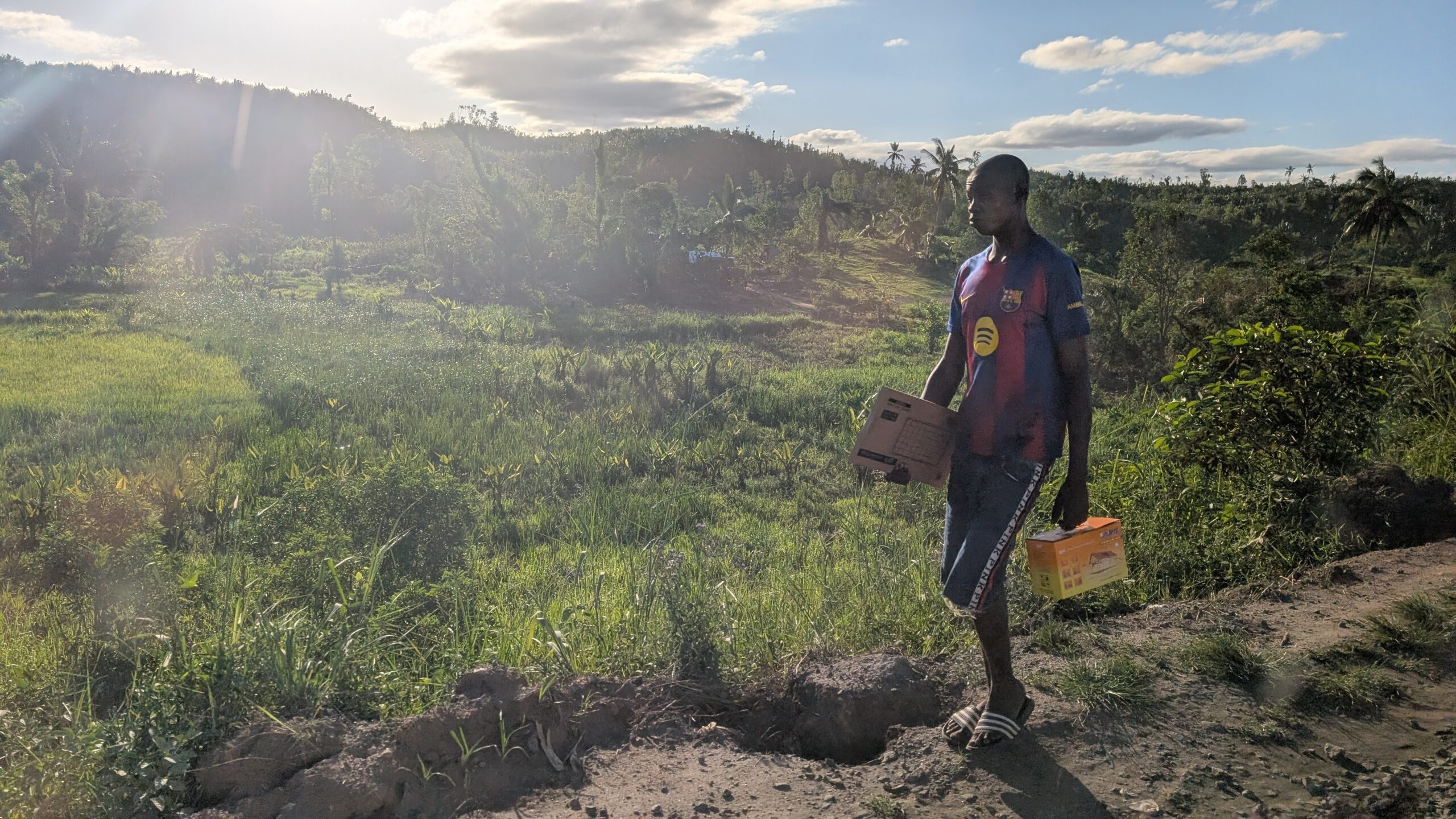
Following cyclone GEZANI in February 2026, the DECIM Project, implemented by the Ministry of Digital Development, Posts, and Telecommunications (MNDPT) and the Ministry of Energy and Hydrocarbons (MEH), with financial support from the World Bank Group, mobilized the DECIM Fund to support the Malagasy government’s efforts to assist the hardest-hit populations in the unelectrified areas of the Toamasina II district by distributing 30,000 solar kits free of charge to the most vulnerable communities.

As part of this effort, a special emergency response center was launched to provide free solar kits to disaster-affected households identified by the government. The goal was to enable families to quickly regain access to lighting and charging solutions for their essential devices.

The distributions began in April 2026 with support from Izili, HERi, YAS, Startimes, NEA and LEMI.

On April 1, more than 6,000 solar kits were distributed in the rural commune of Fanandrana, in the presence of the Minister of Energy and Hydrocarbons. On April 9, the initiative continued in the rural commune of Ampasimadinika, where 2,560 households received solar kits during a ceremony presided over by the Minister of Digital Development, Posts, and Telecommunications, alongside local officials.

Distributions were then expanded to all targeted municipalities in order to meet the urgent energy needs of the affected populations.

By the end of May 2026, 30,693 solar kits had been distributed across the 12 rural municipalities of the Toamasina II district, covering 92 fokontany.

Through this emergency response, the DECIM Fund helps strengthen the resilience of vulnerable communities by facilitating rapid access to clean and essential energy solutions in the wake of a natural disaster.

Digital – Official launch of sales of affordable digital devices

On February 21, 2026, the DECIM Fund took a huge step toward more equitable access to digital tools.

We officially launched the subsidized sale of Internet-connected smartphones and, at the same time, presented a pilot program to sell laptops to students at the University of Antananarivo and the University of Fianarantsoa.

The ceremony was held under the high patronage of His Excellency the President of the Refoundation of the Republic of Madagascar, Colonel Michaël Randrianirina, in the presence of Mr. Mahefa Andriamampiadana, Minister of Digital Development, Posts, and Telecommunications (MNDPT); Professor Ndaohialy Manda-Vy Rarivomanantsoa, Minister of Higher Education and Scientific Research (MESUPRES); and Mr. Atou SECK, Resident Representative of the World Bank Group in Madagascar, the DECIM Project Coordination Unit, official partner distributors, representatives of the targeted universities, and various program stakeholders.

Goal: to bridge the digital divide and enable thousands of Malagasy people, particularly women and students, to access affordable, connected digital devices.

With this in mind, 664,000 subsidized digital devices with Internet access will be made available to the public, 400,000 of which are specifically intended for women and girls, in order to sustainably reduce the gender digital divide.

1,400 laptops will be deployed at a later date as part of the pilot project for students at the Universities of Antananarivo and Fianarantsoa, in preparation for a future nationwide rollout.

Subsidized smartphones are now available from official partner retailers, including: 𝗣𝗮𝗼𝘀𝗶𝘁𝗿𝗮 𝗠𝗮𝗹𝗮𝗴𝗮𝘀𝘆, 𝗦𝗠𝗠𝗘𝗖, 𝗜𝗭𝗜𝗟𝗜, 𝗛𝗘𝗥𝗶, 𝗝𝗶𝗿𝗼-𝗩𝗲, 𝗠𝗮𝗸𝗮𝘁𝘆, 𝗔𝗶𝗿𝘁𝗲𝗹 𝗠𝗮𝗱𝗮𝗴𝗮𝘀𝗰𝗮𝗿, 𝗢𝗿𝗮𝗻𝗴𝗲 𝗠𝗮𝗱𝗮𝗴𝗮𝘀𝗰𝗮𝗿 and 𝗬𝗔𝗦.

Mini-grids – The DECIM Fund signs a second grant agreement to accelerate rural electrification in Madagascar

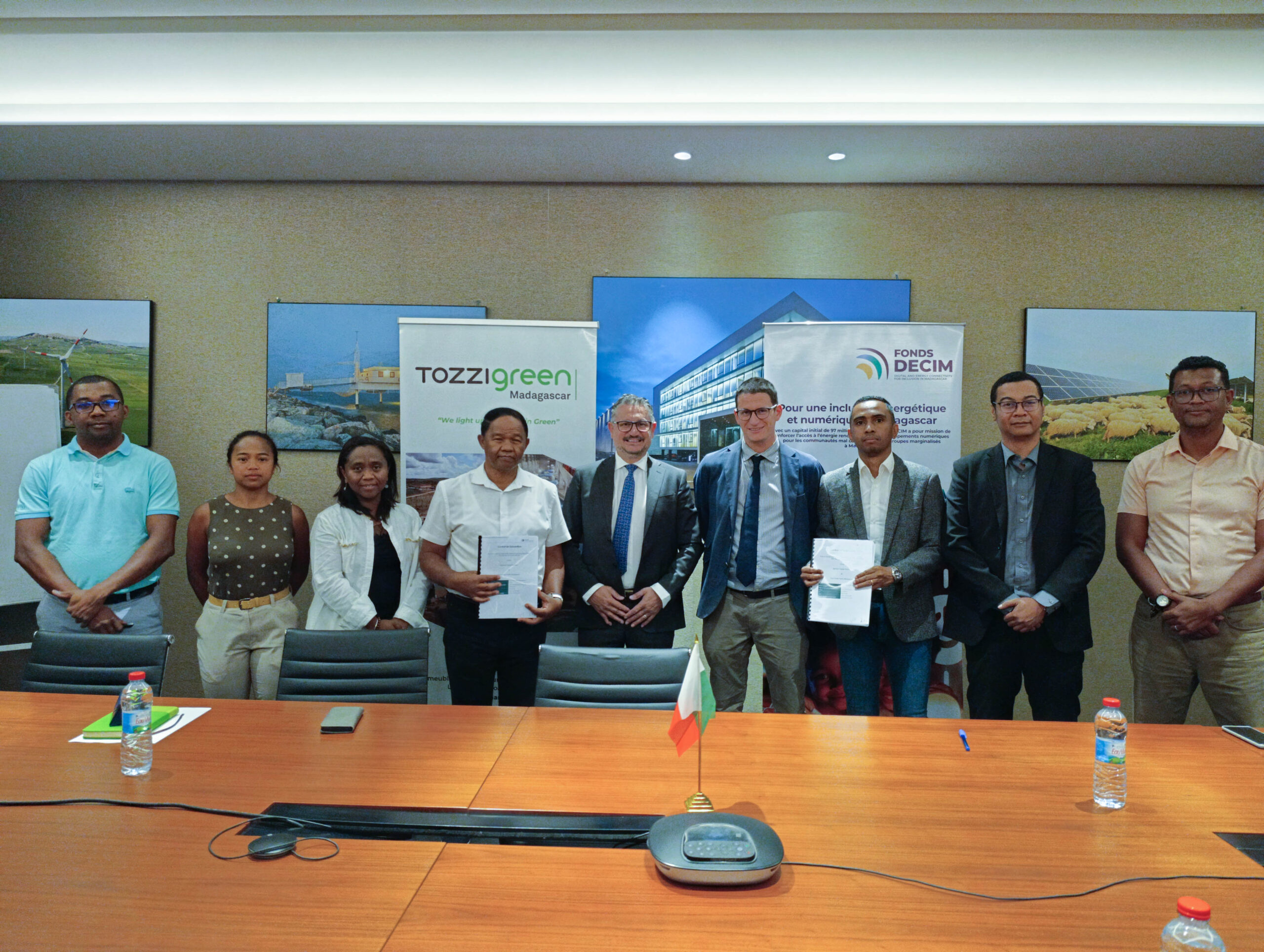
Antananarivo, October 10, 2025 – The DECIM Fund has taken another step forward in its mission to improve access to essential services by announcing the signing of its second grant agreement under the Mini-Grids component.

This grant was awarded to Tozzi Green Madagascar under Window 1 – New Mini-Grids to support the development of sustainable energy infrastructure for underserved rural communities.

The funded project involves the installation of 19 solar and hydroelectric mini-grids in 52 communities spread across seven regions (Boeny, Betsiboka, Vakinankaratra, Itasy, Analamanga, Ambatosia, and Ihorombe), with a total installed capacity of 2,307 kW. Ultimately, this infrastructure will connect more than 5,000 new households and users to a reliable and affordable electricity supply.

This initiative is fully aligned with the DECIM Fund’s objective, which is to increase access to reliable, inclusive, and affordable energy and digital infrastructure, while promoting local economic development and improving the living conditions of rural communities.

Preparatory work is already underway. Following this agreement, Tozzi Green organized information and outreach sessions on October 23, 24, and 31, 2025, for the participating rural municipalities to present the project to local stakeholders and prepare for the start of construction.

The signing of this second contract marks a significant step forward for the Mini-grids component of the DECIM Fund and confirms the momentum toward achieving universal access to electricity in Madagascar.

Mini-Grids – Launch of Window 3: Innovation

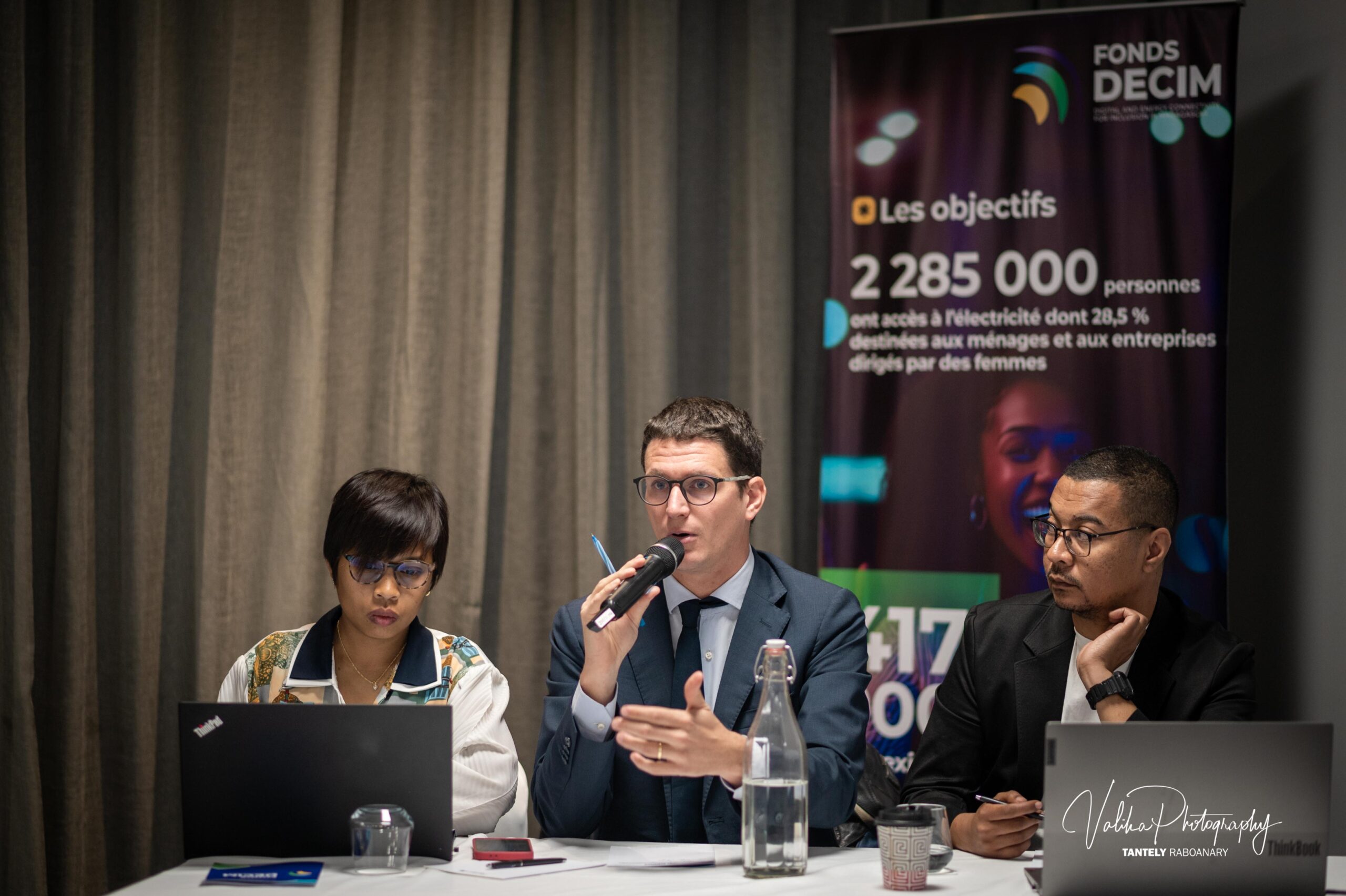
September 19, 2025 – The DECIM Fund officially launched Window 3 – Innovation of its Mini-Grids component at an event held at the Radisson Blu Tana Waterfront Ambodivona, attended by public institutions, technical and financial partners, and private sector operators.

This new initiative offers a unique opportunity for companies to experiment with distributed renewable energy technologies (pico/nano-grids and mesh networks) through the Results-Based Financing Facility (RBF).

With a budget of $2 million, the call for proposals – which opened on September 22, 2025, and will close on March 22, 2026 – will fund innovative pilot projects and contribute to the DECIM Fund’s goal of connecting up to 40,000 households to clean, affordable energy through mini-grids.

During the event, ADER presented the regulatory framework for this initiative, thereby reinforcing the collective commitment to inclusive and sustainable electrification. For its part, UCP DECIM emphasized the strategic importance of this initiative, which serves not only as a key driver for the DECIM Fund but also as a major pillar for the success of the project as a whole.

Solar Home System – Official launch of the program and its first call for projects

August 13, 2025 – The DECIM Fund has officially launched its first call for projects dedicated to the Solar Home System (SHS) component.

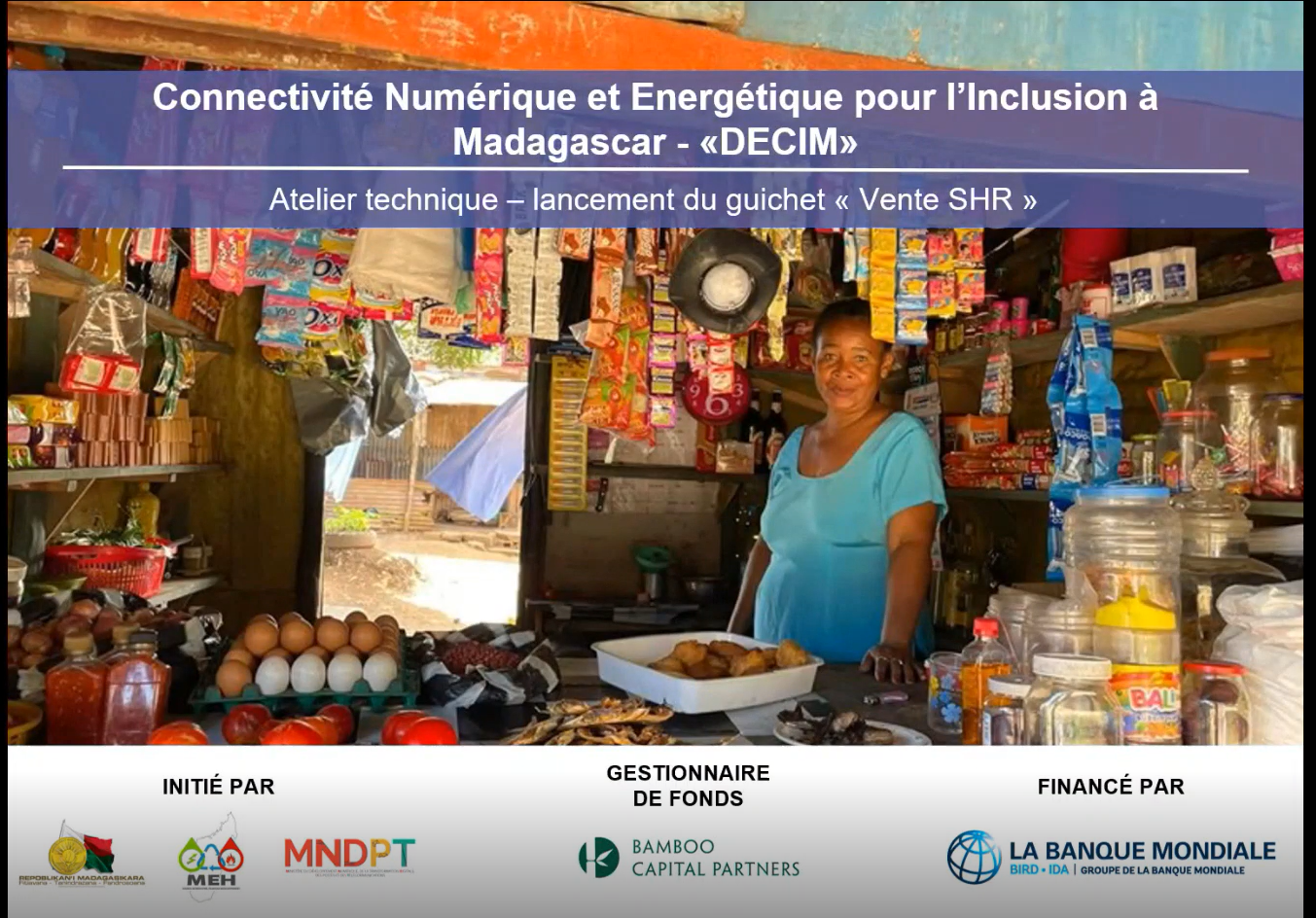
Following this launch, an online technical workshop was held on August 20, 2025, bringing together key industry stakeholders, companies, and technical and financial partners.
This technical workshop provided an opportunity to present the financing mechanisms of Window 1 – Sale of Certified SHR Products – by detailing the operating principles, eligibility criteria, and opportunities available to companies wishing to contribute to rural electrification in Madagascar.

Guichet 1, through its RBF Window, aims to support companies that distribute VeraSol-certified solar products by providing them with grants based on their sales performance. The overall objective of the SHR component is to achieve 417,000 solar connections for households and small businesses, while promoting the distribution of high-quality products backed by reliable after-sales service.

Eligible companies must, in particular, be based in Madagascar, distribute solar products certified as compliant with international standards, have an active distribution network in rural areas, and comply with current national regulations in the energy sector.

Applications were accepted from August 13 to September 19, 2025, via the DECIM Fund’s online platform.